Reflections on AI, Security, and Agents
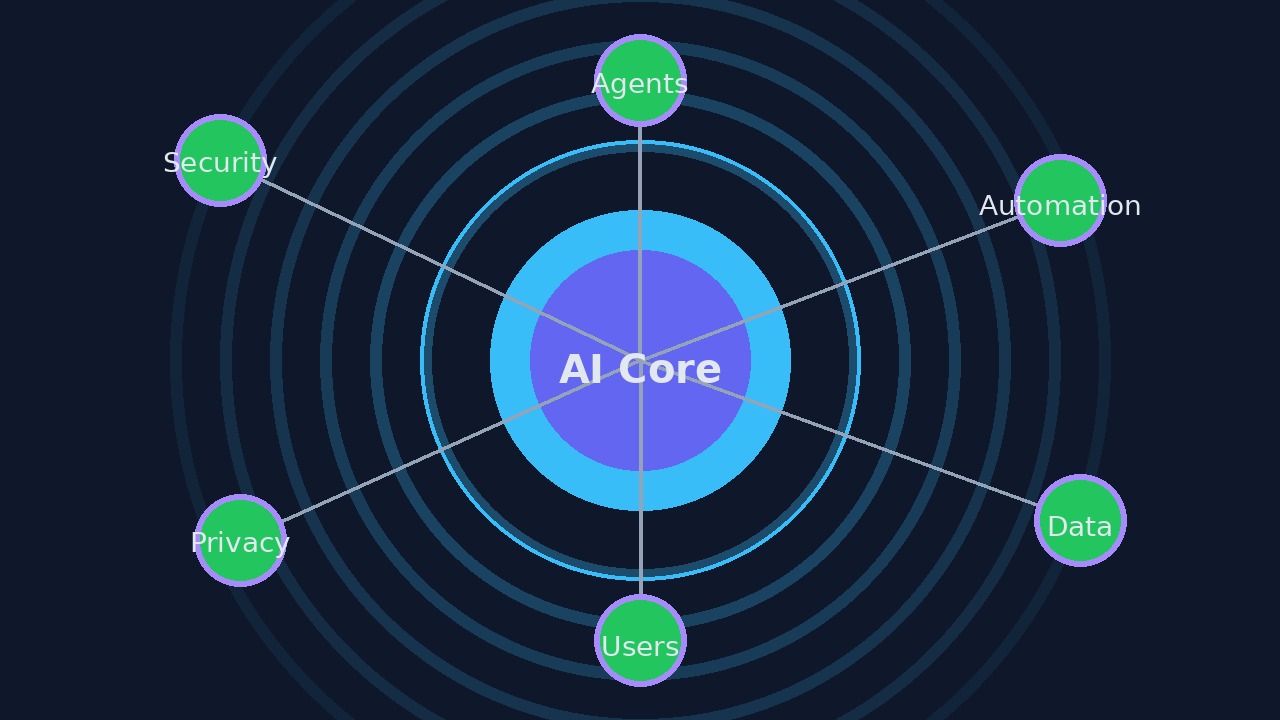
AI is becoming a serious force, and many companies are trying to adapt. But adaptation requires real planning—simply replacing normal tasks with AI is not enough. There are still gaps that need to be filled by agents, and data security and privacy remain critical concerns. We must ensure that people’s information is truly protected.
There is also no straightforward way for AI tools to cover every aspect of human capability. Still, I hope fields like education will increasingly integrate AI, helping people learn faster and more conveniently.
It is unclear what will happen when AI is combined with quantum computing. For now, tasks like coding are becoming much easier—for example, you can build new automation tools with Ansible far more quickly than before. But AI still has issues: hallucinations remain a serious challenge. With good planning, a focused scope, and clear requirements, though, AI can support business growth or even help someone build a new business from scratch.
Creativity and focus are the real tools needed for success.
Some industries, like translation, summarization, and transcription, may soon automate their workflows completely, with high-quality output and little or no human involvement.
AI still has limitations when working on large, multi-file projects and can show biases when fed large datasets, but these issues can gradually be improved.
I hope AI tools continue to grow and help people be more productive and achieve better results in their daily work. We should appreciate the power now available to us. I remember when parsing a log file and searching sites like Stack Overflow for solutions could take hours—now it often takes minutes or even seconds.
It generally does not make sense for most people to build their own specialized AI from scratch. A more practical approach is to use a general AI model with RAG, feeding it your own data to get more relevant responses.
Agents have a clear advantage over traditional SaaS or native applications. Instead of manually dealing with spreadsheets, you simply ask for the result, and the agent handles the process. This could dramatically change how applications work—the UI will likely become more human-centric as computers increasingly understand natural language directly.
AI may not have physical capabilities yet, but the next step will likely involve robotics and embodied AI. These systems could come in many forms—cars, pets, TVs—and they may soon be everywhere.
Companies are now competing for a share of the AI chip market. Google, Amazon, and others are racing to release new AI processors that compete with Nvidia’s Blackwell, the latest generation of their compute units. It makes sense: this market segment is expanding rapidly. Nvidia’s mature software stack currently gives them an edge, and although that lead will not disappear in a year, competitors may reach a comparable level within five years or so.